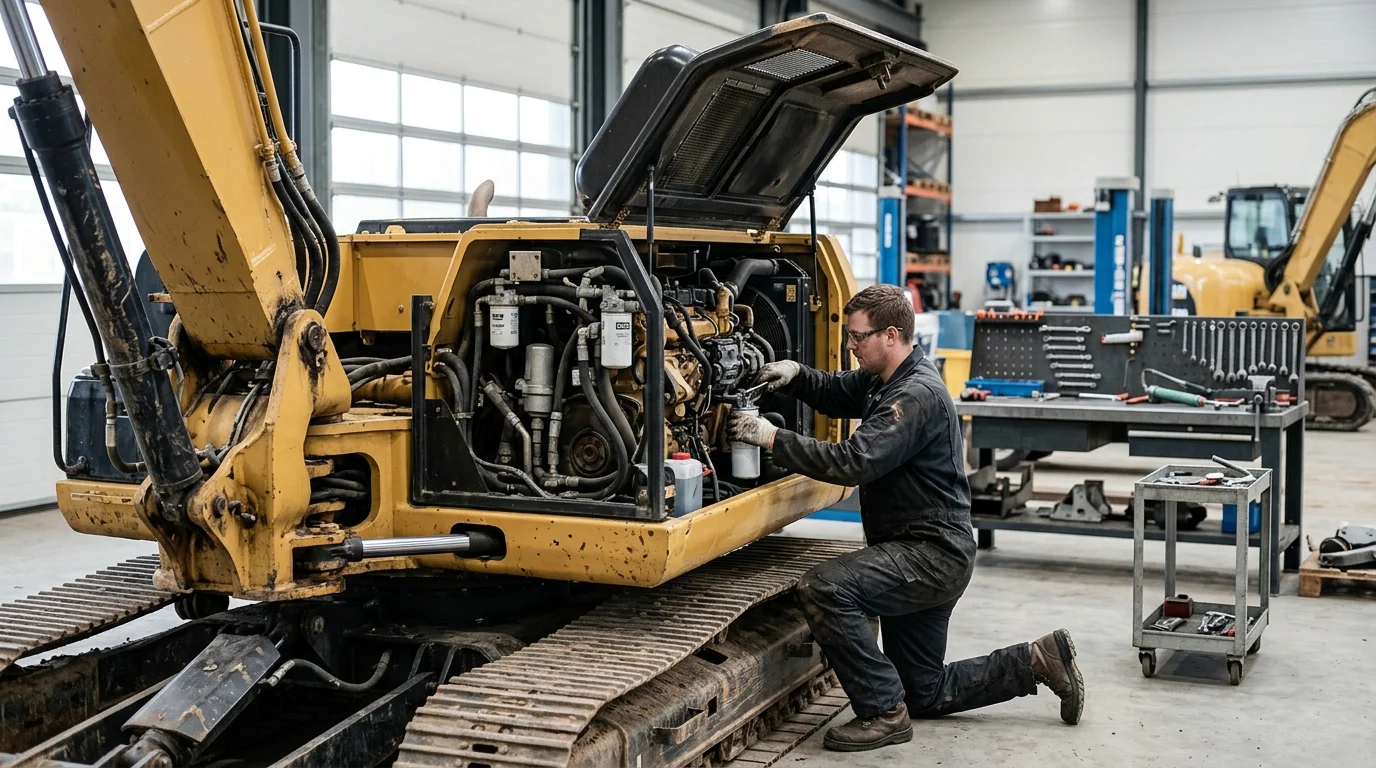
Why Excavator Undercarriage Replacement Planning Matters
For procurement professionals and fleet managers, an excavator's undercarriage is its most critical wear component. Undercarriage maintenance typically consumes up to 50% of a tracked machine's lifetime repair budget. Anticipating exactly when to procure replacement assemblies is vital to maintaining operational profitability and avoiding sudden logistical disruptions.
How to define undercarriage wear in commercial excavators
To properly define wear in commercial excavators, look beyond superficial scratches and focus on measurable material loss. Undercarriage wear is categorized into internal and external degradation. For instance, internal pin and bushing wear causes track pitch extension, forcing sprockets to wear at an accelerated rate. Buyers should benchmark wear against OEM specifications; a component that has lost 10% to 15% of its original hardened steel depth is often entering its final operational phase. Utilizing ultrasonic wear measurement tools captures precise millimeter readings, transitioning maintenance from reactive guessing to predictive data analysis. Documenting the exact millimeter reduction on track link heights creates a reliable timeline for procurement.
Which cost, uptime, and resale risks buyers should track
Failing to replace worn undercarriage parts introduces severe hidden costs. Running components past the 100% wear limit can result in mid-project track failures, costing upwards of $2,500 to $5,000 per day in lost productivity and emergency field repairs. Furthermore, secondary damage occurs when stretched tracks ruin otherwise healthy sprockets and final drives, effectively doubling the replacement bill. From an asset management perspective, machines traded in with undercarriages worn beyond 70% routinely see a 15% to 20% penalty in resale value. Tracking these specific metrics justifies timely procurement interventions before catastrophic failures impact project margins.
Signs Your Excavator Undercarriage Needs Replacement
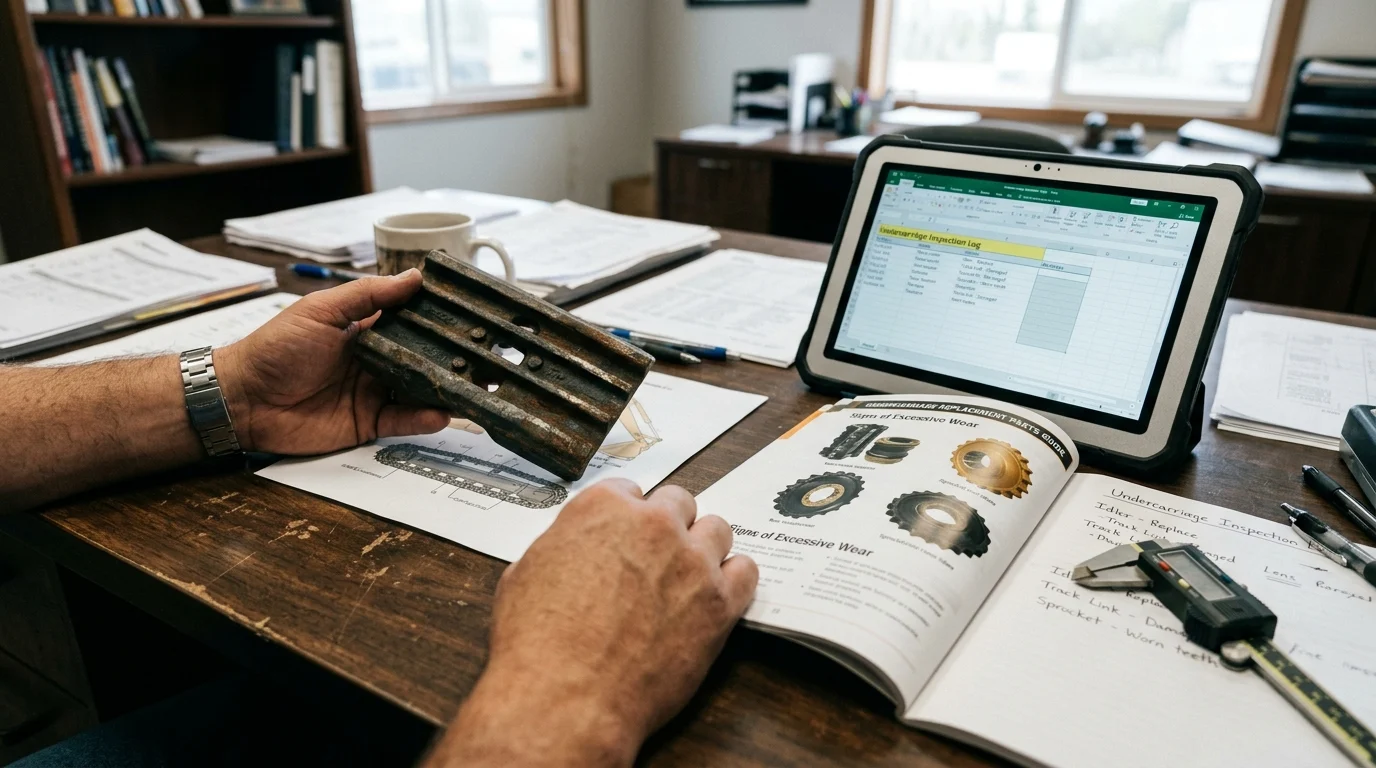
Identifying the exact moment to order replacement parts requires a sharp eye for early warning signals. Routine field inspections and maintenance audits reveal the top diagnostic red flags indicating an undercarriage is nearing the end of its safe service life.
Which wear indicators to check on chains, rollers, and idlers
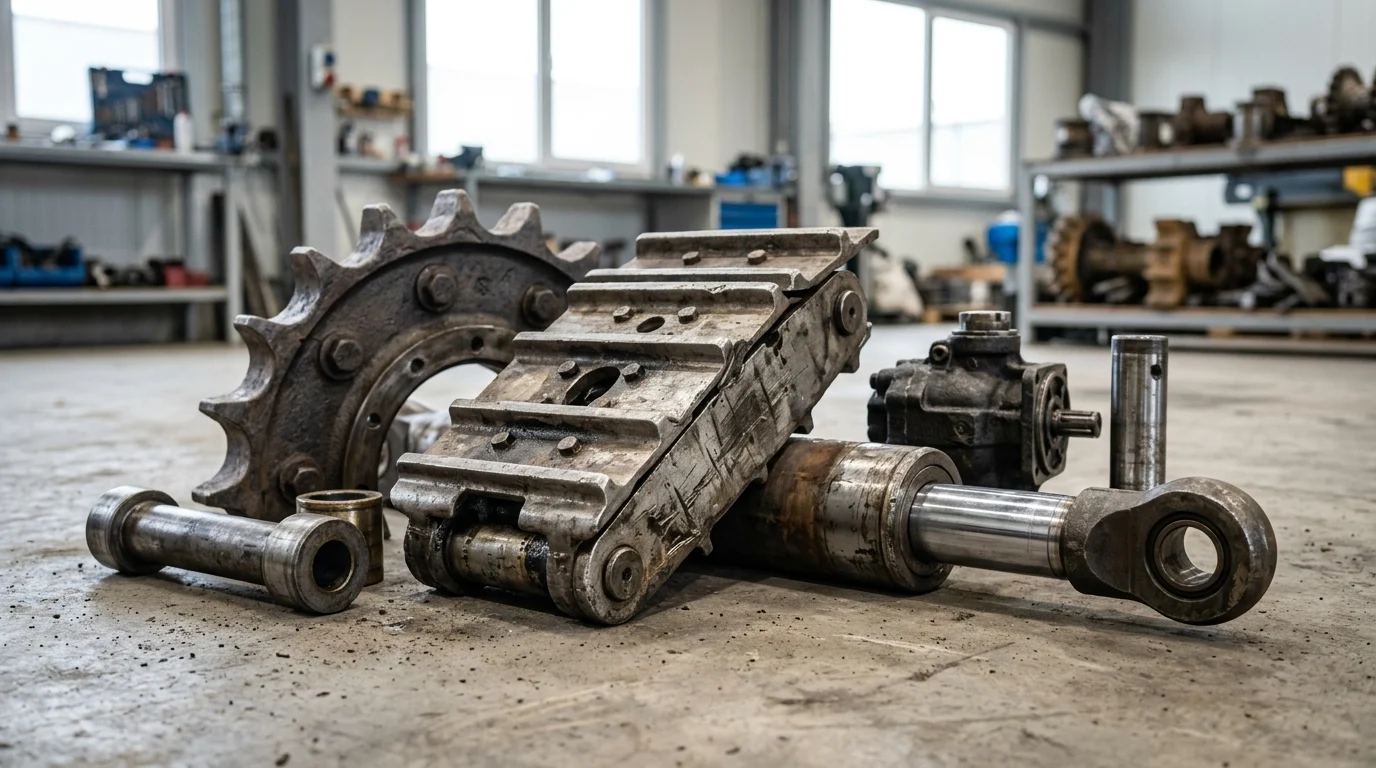
Maintenance teams should monitor five critical pre-failure warning signs. First, excessive track sag—typically anything exceeding 2 inches (50 mm) of droop between the carrier roller and idler—signals severe internal pin wear. Second, sprocket teeth worn down to sharp, pointed profiles indicate they are no longer meshing correctly with the track links. Third, oil weeping from the bottom or top rollers means the internal seals have failed, rapidly leading to bearing seizure. Fourth, flat spots or deep grooving on the front idlers suggest the track chain is dragging rather than rolling smoothly. Finally, hairline cracks on the track shoes or exposed, galled bushings are immediate indicators that the chain's structural integrity is dangerously compromised.
How operating conditions, machine hours, and inspections affect timing
Replacement timing is heavily influenced by the working environment and machine hours. A 20-ton excavator working in highly abrasive silica sand might require a full undercarriage rebuild at just 2,000 hours, whereas the exact same machine operating on soft clay could easily surpass 4,000 hours of service. To manage this variability, implement a rigid preventative maintenance plan. This protocol should mandate daily visual walk-arounds to clear packed debris, combined with comprehensive 250-hour ultrasonic wear inspections. By mapping wear rates against logged engine hours, procurement teams can accurately forecast when a machine will hit the critical 80% wear threshold. This allows ample time to source replacement parts at standard freight rates, avoiding expensive air-freight expediting.
How Procurement Teams Should Source and Order Undercarriage Parts
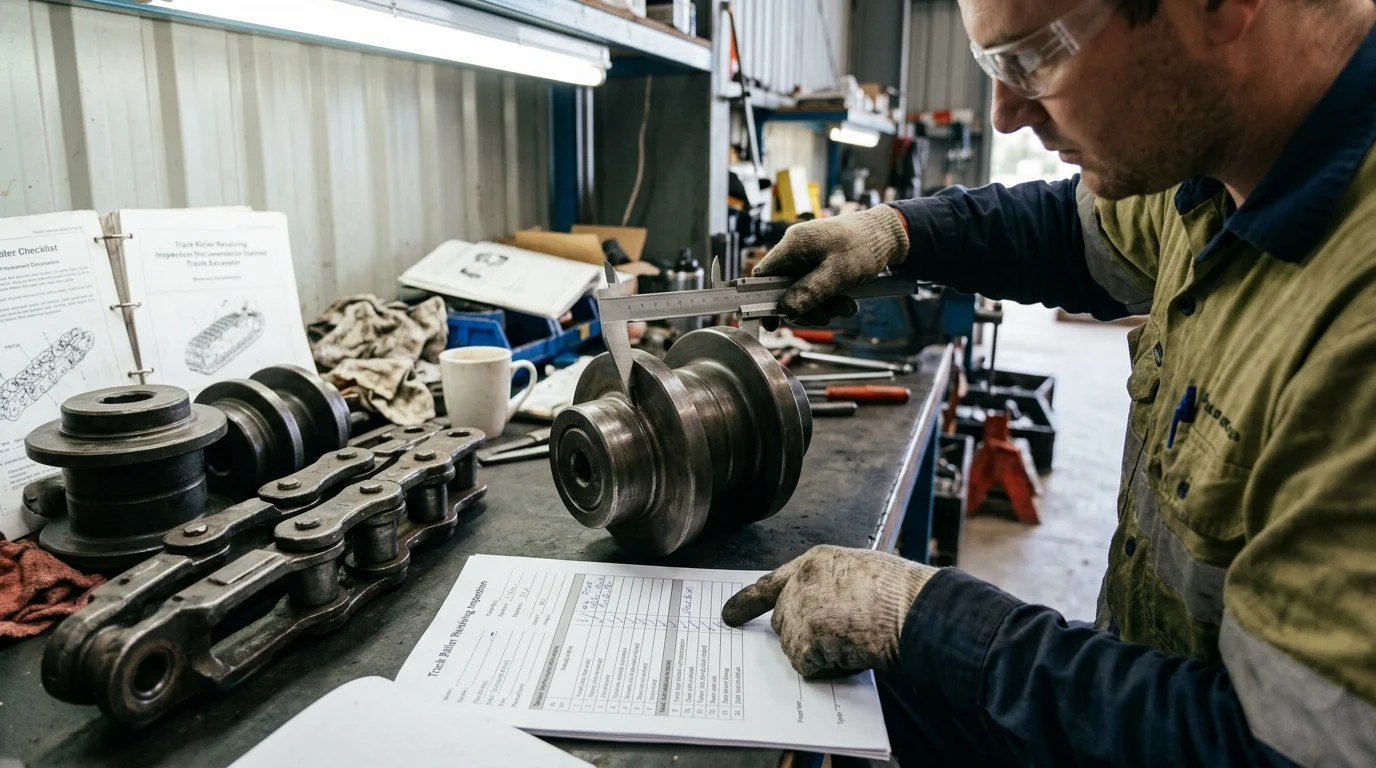
Once replacement is deemed necessary, the next challenge is executing a cost-effective sourcing strategy. Procurement teams must balance upfront capital expenditure with long-term reliability while navigating a complex global supply chain of heavy machinery components.
What to compare when evaluating OEM and aftermarket options
When evaluating OEM versus aftermarket undercarriage parts, analyze the total value proposition rather than just the initial sticker price. Premium aftermarket suppliers have significantly closed the quality gap in recent years, often utilizing the same induction hardening processes and boron steel alloys as original equipment manufacturers. To make informed purchasing decisions, compare these options across several critical B2B metrics:
| Feature | OEM Parts | Premium Aftermarket |
|---|---|---|
| Initial Cost | Baseline (100%) | 30% to 50% lower |
| Steel Hardness | HRC 50-55 | HRC 48-54 |
| Typical Warranty | 12-24 months | 6-12 months |
| Lead Time | 1-3 weeks (local stock) | 4-8 weeks (import) |
By analyzing these specifications, buyers can confidently route standard wear items like track shoes to aftermarket suppliers, while potentially reserving OEM budgets for highly stressed components like final drive motors.
Which ordering, logistics, and supplier qualification steps reduce risk
To mitigate supply chain risks, carefully vet component manufacturers and distributors. Prioritize suppliers holding active ISO 9001 and ISO 14001 certifications, ensuring both quality management and environmental compliance during metallurgical forging processes. Because undercarriage assemblies are extremely heavy—a complete set for a standard 30-ton excavator can weigh over 4,500 kilograms—logistics planning is paramount to protecting profit margins. Negotiating Minimum Order Quantities (MOQs) at the 20-foot container level (FCL) optimizes ocean freight rates, bringing the per-unit shipping cost down by as much as 35% compared to Less-than-Container Load (LCL) shipments. Factoring in an average 35- to 45-day ocean transit time and potential customs clearance delays, aligning the ordering schedule with predictive maintenance data ensures replacement parts hit the warehouse floor exactly when the excavators need them.
Key Takeaways
- Wholesale sourcing and supply-chain implications for excavator maintenance
- Specifications, compliance, and commercial terms buyers should validate
- Actionable recommendations for distributors and procurement teams
Frequently Asked Questions
What are the clearest signs an excavator undercarriage needs replacement?
Watch for excessive track sag over 50 mm, pointed sprocket teeth, roller oil leaks, grooved idlers, and cracked shoes or exposed bushings. These are common pre-failure indicators.
How often should undercarriage wear be inspected?
Do daily visual walk-arounds and schedule detailed wear checks every 250 operating hours. Use measured readings, not just appearance, to plan replacement accurately.
At what wear level should replacement planning begin?
Start planning around 80% wear. Parts that have lost about 10% to 15% of hardened steel depth are often near the final service phase and should be closely monitored.
How do jobsite conditions affect undercarriage life?
Abrasive ground like silica sand can shorten life to about 2,000 hours, while soft clay may allow 4,000+ hours. Match replacement timing to actual wear and site conditions.
Why is delaying undercarriage replacement costly?
Running past full wear can cause track failure, damage sprockets and final drives, and increase downtime costs. It can also reduce resale value by roughly 15% to 20%.