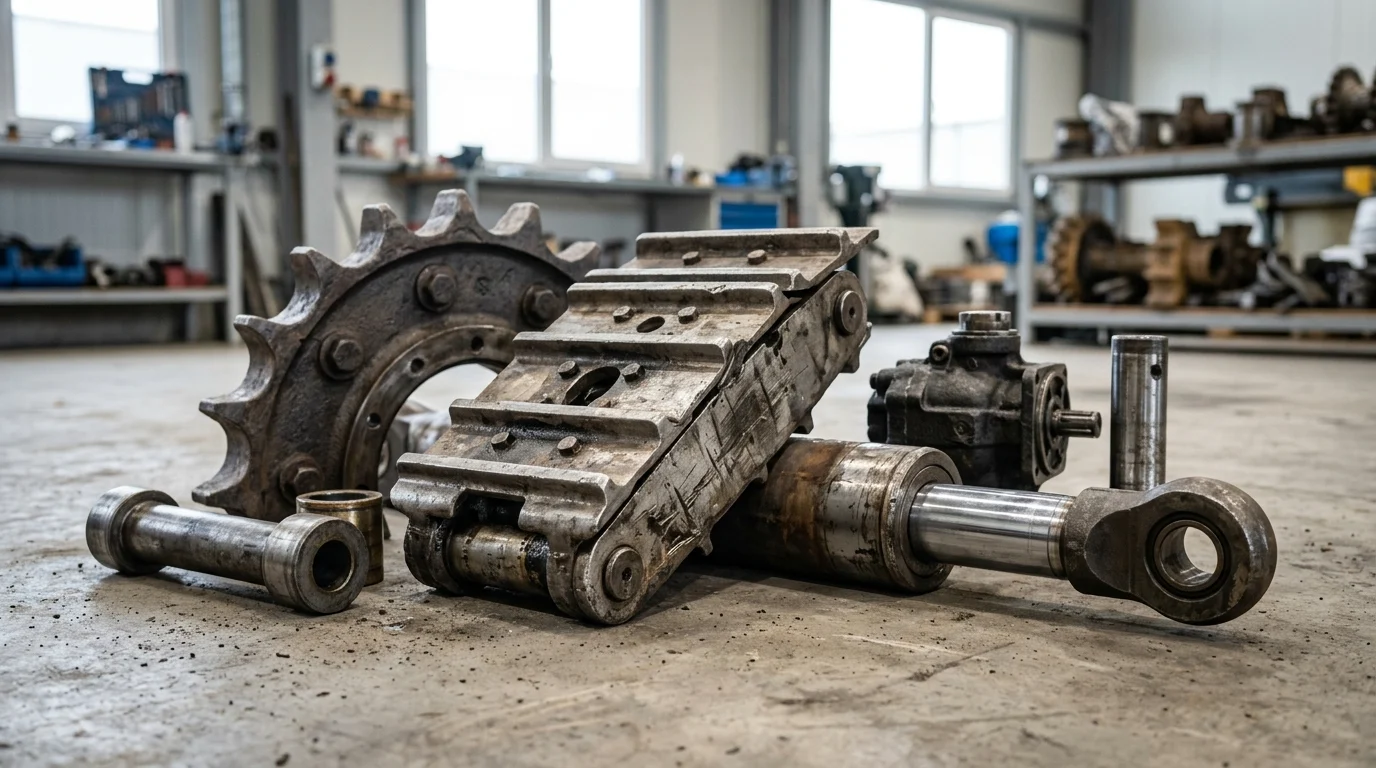
Why Mining Equipment Parts Matter for Uptime and Cost Control
When evaluating modern mining operations, the reliability of mining equipment parts directly dictates overall profitability. In an industry where gross margins are tightly coupled with continuous, uninterrupted production, unexpected mechanical failures are unacceptable. Harsh operating conditions—ranging from sub-zero open pits to deep underground shafts—demand components engineered specifically to withstand relentless physical abuse from extracted ores. Robust wear parts are not just consumable expenses; they are critical investments in plant availability and cost control.
How Wear, Impact, Corrosion, and Heat Affect Service Life
Wear, impact, corrosion, and heat act as a destructive combination on heavy mining machinery. High-silica ores inflict severe abrasive wear, requiring wear parts with a Brinell hardness (HBW) ranging from 400 to 600 just to maintain baseline service limits. Impact forces from blasted rock dropping into primary crushers can cause catastrophic micro-fractures if the steel lacks adequate toughness. Furthermore, highly acidic mine water accelerates surface corrosion, while localized friction pushes operating temperatures above 200°C, rapidly degrading standard alloys. Analyzing these variables simultaneously is essential. Failing to account for just one critical factor—such as specifying a highly abrasion-resistant but brittle alloy in a high-impact crushing zone—can slash expected service life by up to 60%.
Which Parts Create the Highest Downtime Risk
Certain mining equipment parts carry a disproportionately high risk of halting entire production lines. Primary crusher liners, excavator bucket teeth, and heavy-duty slurry pump impellers are constantly on the front lines of bulk material handling. When a mantle or bowl liner fails prematurely, the entire downstream crushing and grinding circuit stops. In large-scale copper or iron ore operations, this type of unplanned downtime can easily cost between $20,000 and $100,000 per hour in lost revenue. Consequently, inventory reserves and predictive maintenance strategies must focus heavily on these high-wear items. Sourcing substandard replacements might save 15% on upfront capital expenditures, but it exposes the operation to millions in lost throughput and emergency repair labor.
How to Evaluate Mining Equipment Wear Parts
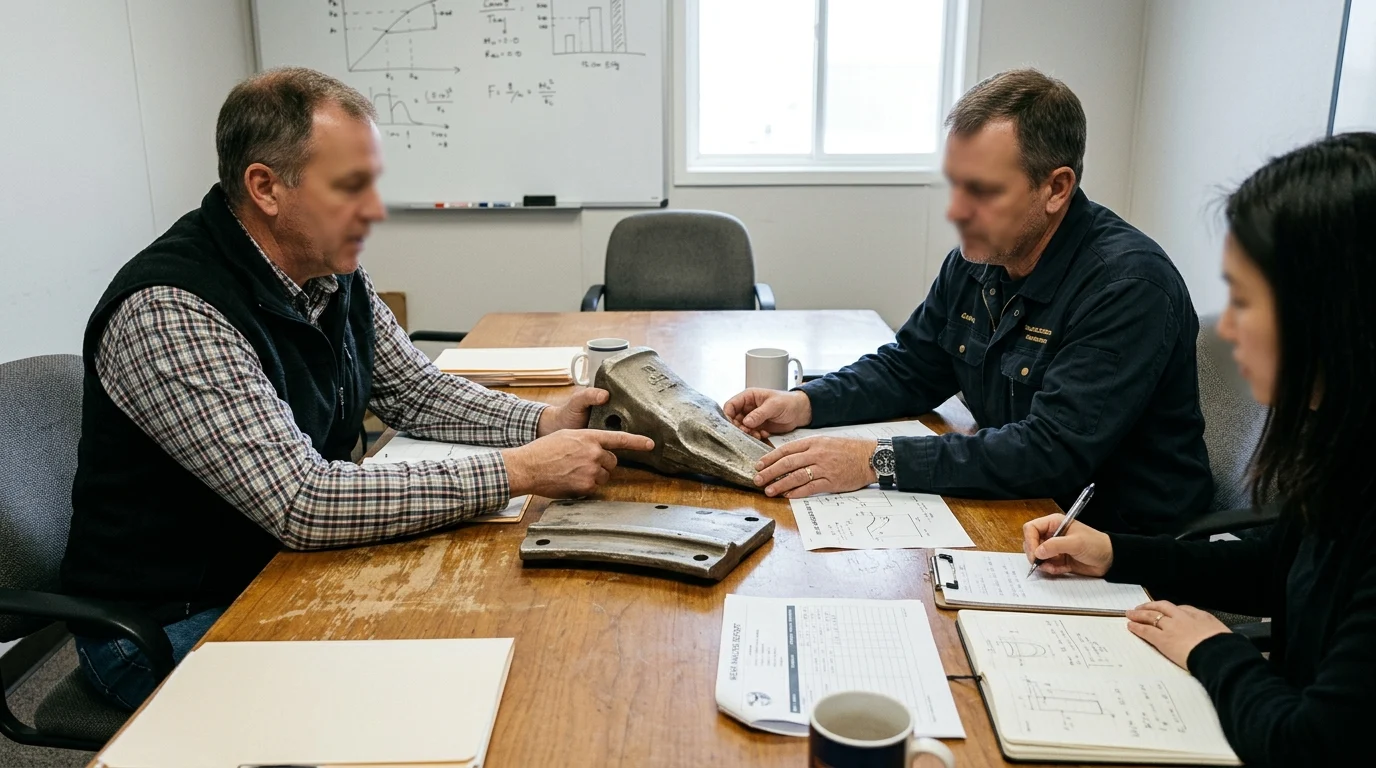
To maximize uptime and protect margins, procurement teams must rigorously assess mining equipment parts. Relying solely on dimensional accuracy is insufficient; the true commercial value of a wear part lies in its hidden metallurgical integrity and its proven performance track record in extreme, high-stress environments.
What Criteria Buyers Should Use to Compare Parts
Buyers should evaluate replacement components based on the total cost-per-ton of processed material rather than the initial unit price. Specific metrics to look for during procurement include precise alloy composition, documented hardness gradients from surface to core, and volumetric wear rates under simulated conditions. Standardizing this evaluation requires comparative performance matrices.
| Evaluation Metric | Standard Wear Parts | Premium Wear Parts (e.g., Digtech) | Operational Impact |
|---|---|---|---|
| Surface Hardness | 300 – 400 HBW | 500 – 650 HBW | Reduces abrasion by up to 40% |
| Impact Toughness | < 20 J/cm² | > 30 J/cm² | Prevents catastrophic brittle failure |
| Cost-per-Ton | $0.15 / ton | $0.09 / ton | 40% reduction in consumable spend |
| Expected Lifespan | 3 – 4 months | 6 – 8 months | Halves maintenance downtime intervals |
By demanding these specific thresholds, operations ensure that capital is deployed toward parts that genuinely extend maintenance intervals rather than merely filling a warehouse bin.
How Material and Process Quality Improve Wear Performance
The quality of raw materials and the precision of the manufacturing process fundamentally dictate long-term wear performance. For instance, high-manganese steel (such as Mn18Cr2) relies heavily on the principle of work-hardening; as it absorbs severe impact, its surface hardness dramatically increases from a baseline of around 200 HBW to over 500 HBW, while the core remains highly ductile. Conversely, for high-abrasion, low-impact zones, high-chrome white cast iron is the preferred metallurgical solution. Brands like Digtech demonstrate significant material and process advantages in this space by utilizing advanced vacuum consumable casting and precise, multi-stage heat treatment protocols. These proprietary metallurgical controls ensure a uniform carbide distribution, virtually eliminating the microscopic internal defects that cause sudden structural failure. Parts leveraging optimized microstructures can extend operational lifespans by 30% to 50% compared to conventional foundry outputs, directly boosting overall equipment effectiveness (OEE).
How to Source Mining Equipment Parts with Lower Risk
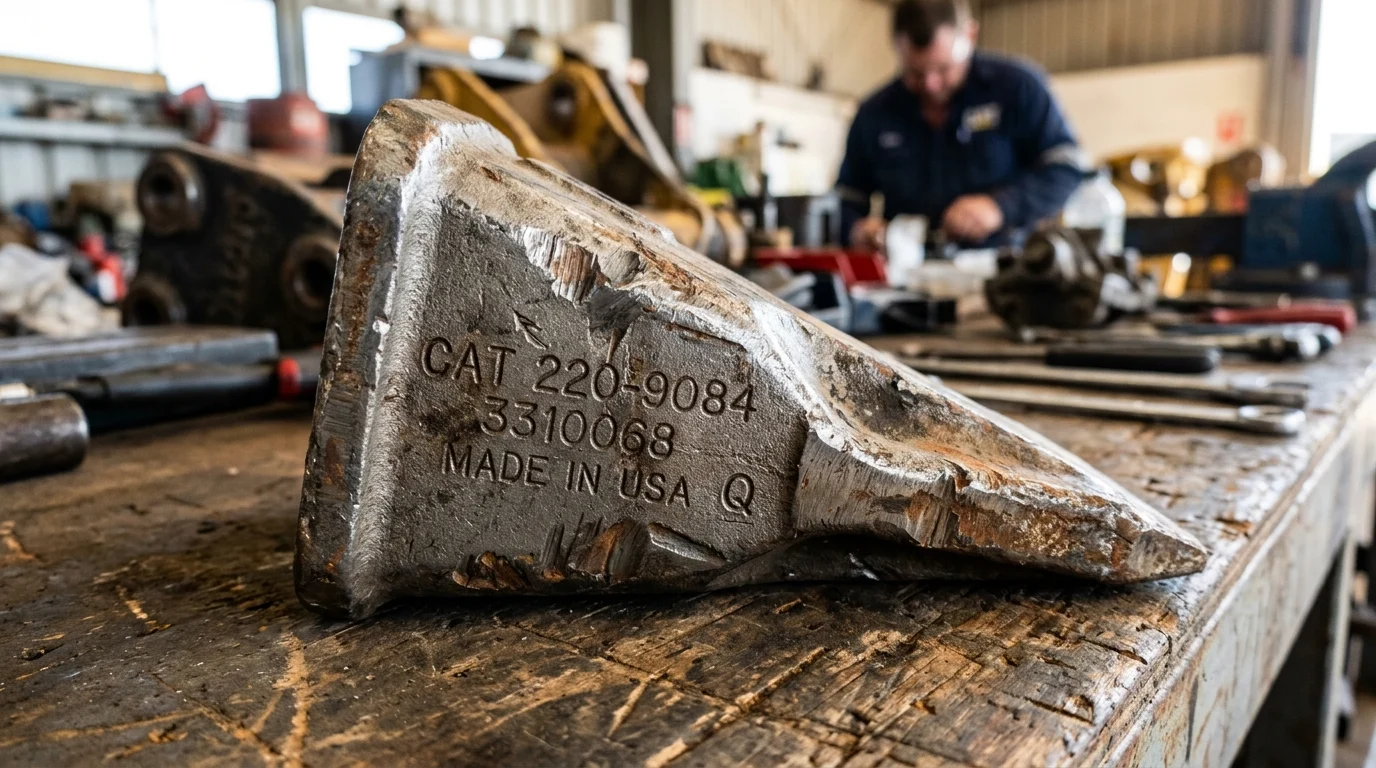
Securing a reliable supply chain for mining equipment parts requires a proactive, data-driven approach to risk management. Procurement professionals must build robust sourcing frameworks that prioritize consistent metallurgical quality, manageable international lead times, and fully transparent manufacturing processes.
What Sourcing Steps Help Procurement Teams Reduce Risk
Effective sourcing steps begin with rigorous, on-site supplier audits and quality assurance mandates. Foundry partners should maintain casting defect rates strictly below 0.5% and provide complete ultrasonic testing (UT) alongside magnetic particle inspection (MPI) reports for every critical batch. Procurement teams must also align their strategies with logistical realities. Custom-cast wear parts typically require a Minimum Order Quantity (MOQ) of 5 to 10 tons just to justify complex tooling and induction furnace costs, with factory production lead times averaging 45 to 60 days. By accurately forecasting regional wear rates and establishing strategic consignment inventory agreements with global distributors, operations can successfully buffer against unforeseen supply chain shocks and ensure that replacement parts are securely on-site weeks before the critical wear limit is reached.
What Decision Framework Supports Supplier Selection
A robust decision framework for supplier selection carefully balances technical manufacturing capability with long-term commercial stability. By prioritizing suppliers with proven metallurgical expertise and transparent quality controls, mining operations can secure the reliable wear parts necessary to maximize uptime and profitability.
Key Takeaways
- Wholesale sourcing and supply-chain implications for mining equipment parts
- Specifications, compliance, and commercial terms buyers should validate
- Actionable recommendations for distributors and procurement teams
Frequently Asked Questions
Which mining equipment wear parts usually create the highest downtime risk?
Primary crusher liners, excavator bucket teeth, and slurry pump impellers are the highest-risk parts. Keep safety stock and inspect them on a fixed schedule to avoid line stoppages.
How should buyers compare mining equipment parts beyond unit price?
Compare cost-per-ton, hardness, impact toughness, and expected service life. A cheaper part can cost more if it wears faster or causes unplanned shutdowns.
What hardness range is typically suitable for abrasive mining conditions?
For high-abrasion ore, wear parts often need about 400 to 600 HBW. Confirm the hardness matches your ore and impact level, not just the catalog spec.
Why can highly abrasion-resistant parts still fail early?
If the alloy is hard but too brittle, impact loads can cause cracking. Choose a balance of hardness and toughness for crushing zones and blasted rock handling.
How can mining sites extend wear part service life in harsh conditions?
Match material to ore, monitor wear trends, stock critical spares, and replace parts before failure. Also check for corrosion and heat exposure that can shorten lifespan.