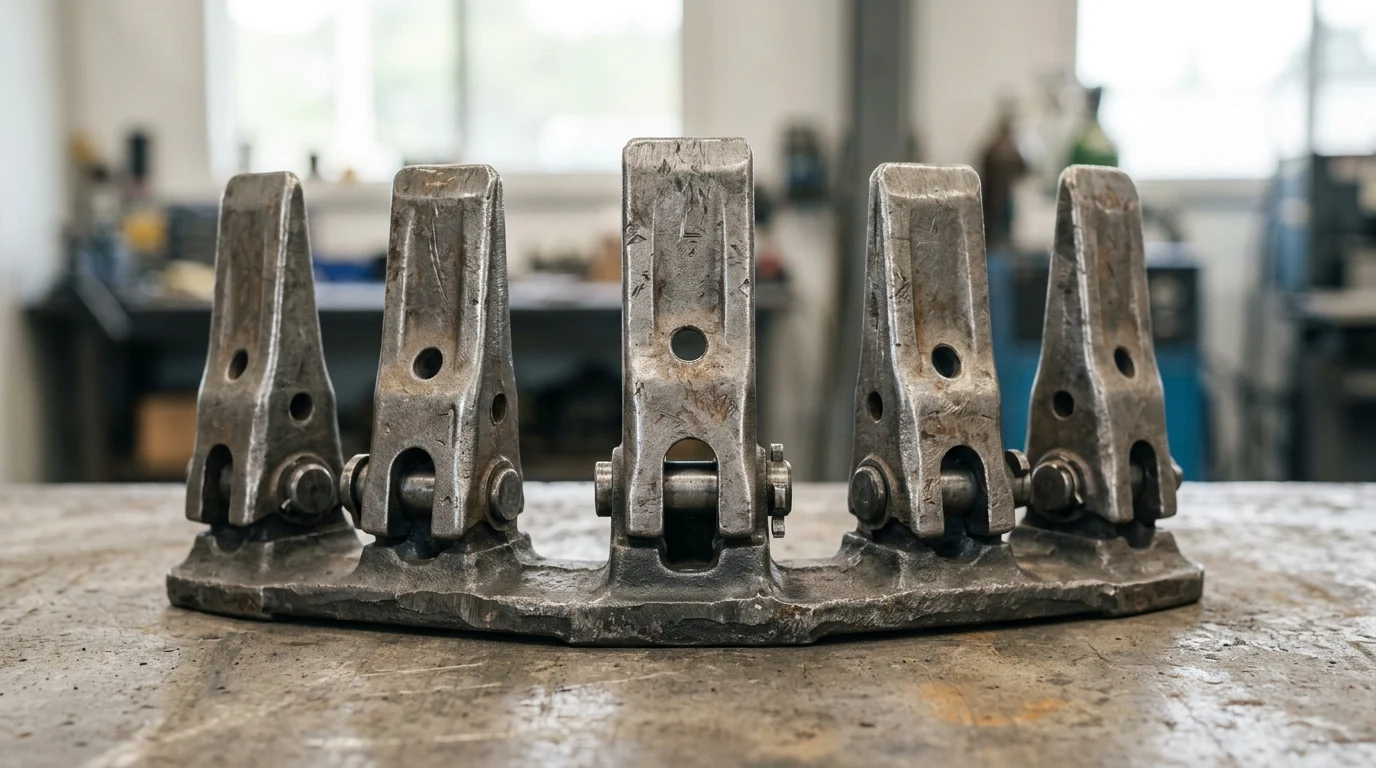
How to Choose Excavator Bucket Teeth That Fit
Selecting the right excavator bucket teeth is more than a routine maintenance purchase; it is a strategic decision that directly impacts machine uptime, fuel efficiency, and overall profit margins. Sourcing mismatched or improperly profiled teeth risks damaging the bucket adapter and increasing fuel consumption by forcing the machine to work harder. Therefore, mastering technical fitment is the foundational step before negotiating pricing.
Key Specifications for Compatibility
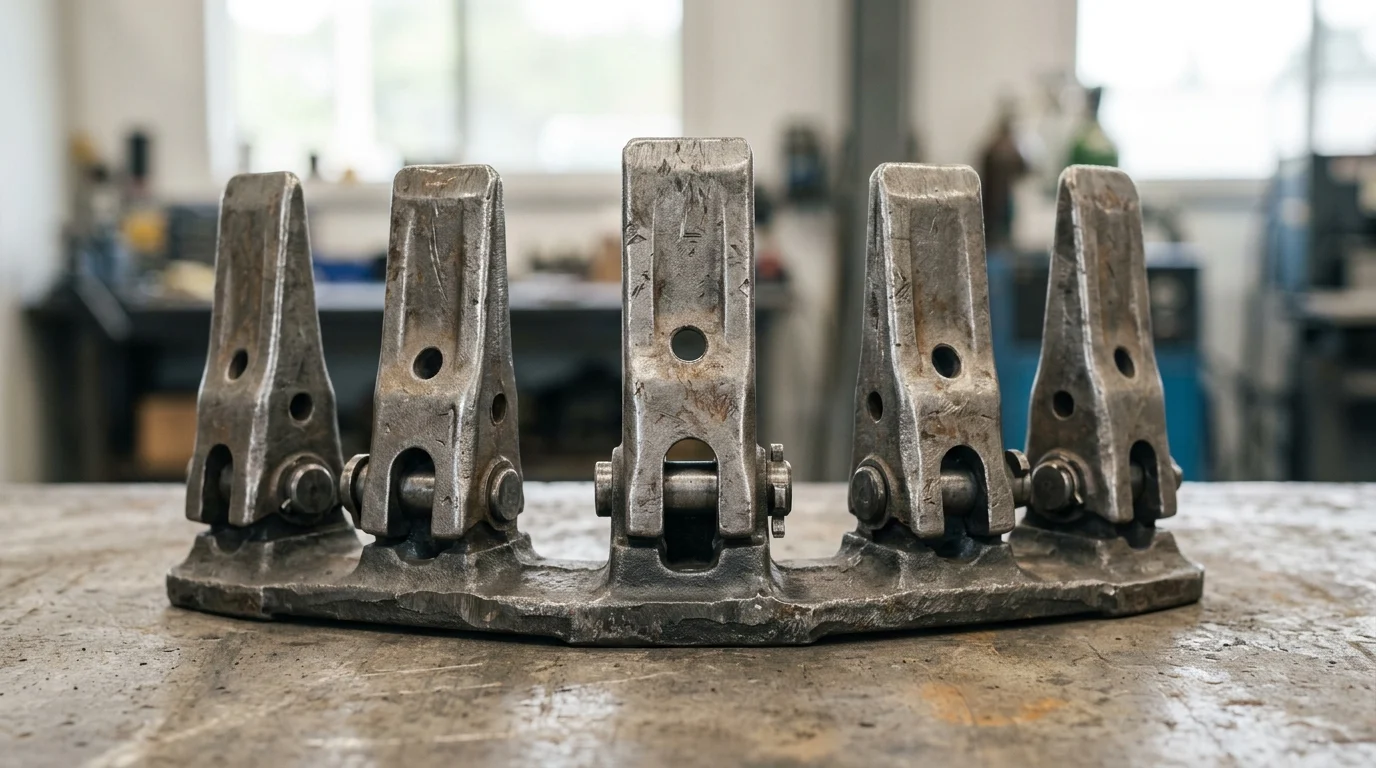
To ensure seamless installation for end-users, verify the exact fitment system before placing a bulk container order. The market is dominated by specific retention systems, such as the Caterpillar J-Series (side-pin), Komatsu (horizontal pin), and Esco Super V (vertical pin). When matching these systems, dimensional accuracy is non-negotiable. Manufacturing partners should maintain a tight tolerance variance of less than 1.5mm on the adapter gap to prevent rattling and premature wear. Furthermore, align the tooth size with the host machine's specific weight class. These classes range from compact mini excavators under 5 tons to massive heavy-duty mining machines exceeding 80 tons, dictating pin diameters that typically fall between 18mm and 50mm or more.
How to Match Teeth to Earthmoving Applications
Matching the tooth profile to the specific earthmoving application is critical for maximizing wear life and delivering value to contractors. Below is a comparative framework to categorize sourcing needs based on the working environment:
| Tooth Profile | Primary Application | Relative Wear Life | Penetration Efficiency |
|---|---|---|---|
| Standard / General Purpose | Dirt, loam, loose sand | Baseline (1.0x) | High |
| Rock Chisel / Penetrator | Hard rock, frozen ground | 1.5x – 1.8x | Very High |
| Heavy Duty (HD) / Tiger | Abrasive gravel, mining | 2.0x – 2.5x | Medium |
For standard earthmoving and trenching tasks, a general-purpose profile offers the best cost-to-performance ratio and typically represents the bulk of inventory turnover. However, when procuring components specifically for rock quarries, demolition, or mining sites, specify heavy-duty or rock chisel designs. These feature strategically placed extra wear material to withstand high-impact forces, ensuring the teeth do not snap when prying apart compacted rock.
How to Compare Material Quality and OEM Options
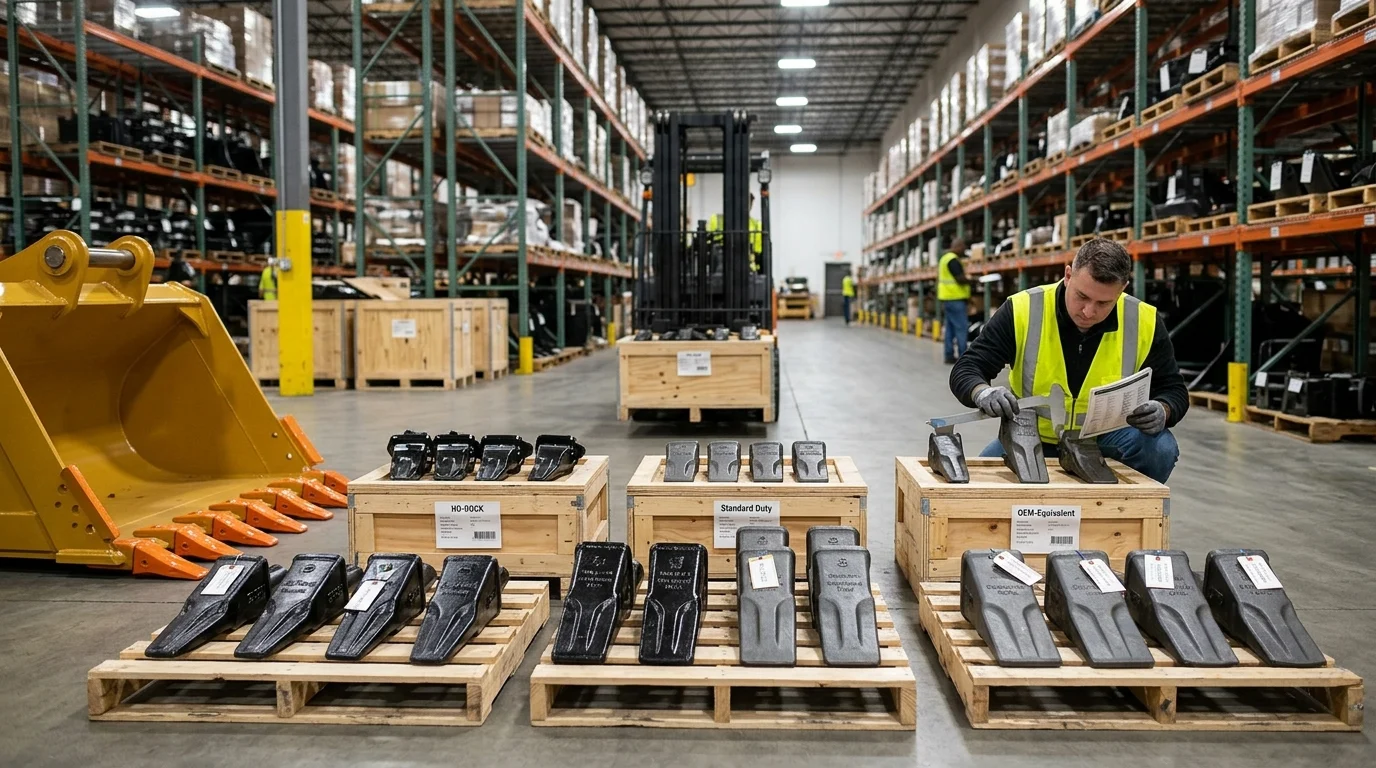
Once the correct dimensional fit and operational profile are established, the next priority is evaluating the metallurgy of the castings. The lifespan of excavator bucket teeth relies almost entirely on the quality of the steel alloy and the precision of the foundry's manufacturing process. B2B buyers must carefully navigate the complex balance between upfront piece-part costs and long-term durability to protect brand reputation.
Material Grade, Hardness, and Heat Treatment Factors
The chemical composition and subsequent heat treatment of the casting dictate its ultimate field performance. Low-alloy carbon steels, such as ZG30CrMo or 30CrMnSiA, offer an excellent balance of raw hardness and structural toughness. Through proper quenching and tempering processes, a high-quality bucket tooth should reliably achieve a surface hardness ranging from 47 to 52 HRC (Rockwell Hardness). However, chasing hardness alone is a trap that causes severe brittleness. Always request comprehensive material test certificates (MTCs) to confirm an impact toughness rating of at least 18 J/cm² alongside a core hardness that closely matches the surface. If a supplier cannot guarantee these specific metallurgical thresholds, the risk of catastrophic mid-operation breakage increases significantly.
When OEM Bucket Teeth Are Worth the Premium
The ongoing debate between Original Equipment Manufacturer (OEM) parts and aftermarket alternatives is a constant challenge in B2B procurement. OEM bucket teeth typically carry a steep 30% to 50% price premium over standard market rates. This premium is generally justifiable only in extreme high-stakes environments—such as 24/7 continuous mining operations—where sudden machine downtime can cost an operation upwards of $1,000 per hour in lost productivity. For standard construction, utility work, and mid-tier earthmoving, premium aftermarket teeth produced by reputable, ISO-certified foundries often deliver 85% to 90% of the OEM lifespan at a fraction of the cost. This dynamic makes high-quality aftermarket parts a much more economical and profitable choice for bulk distribution channels.
How to Source Excavator Bucket Teeth Efficiently
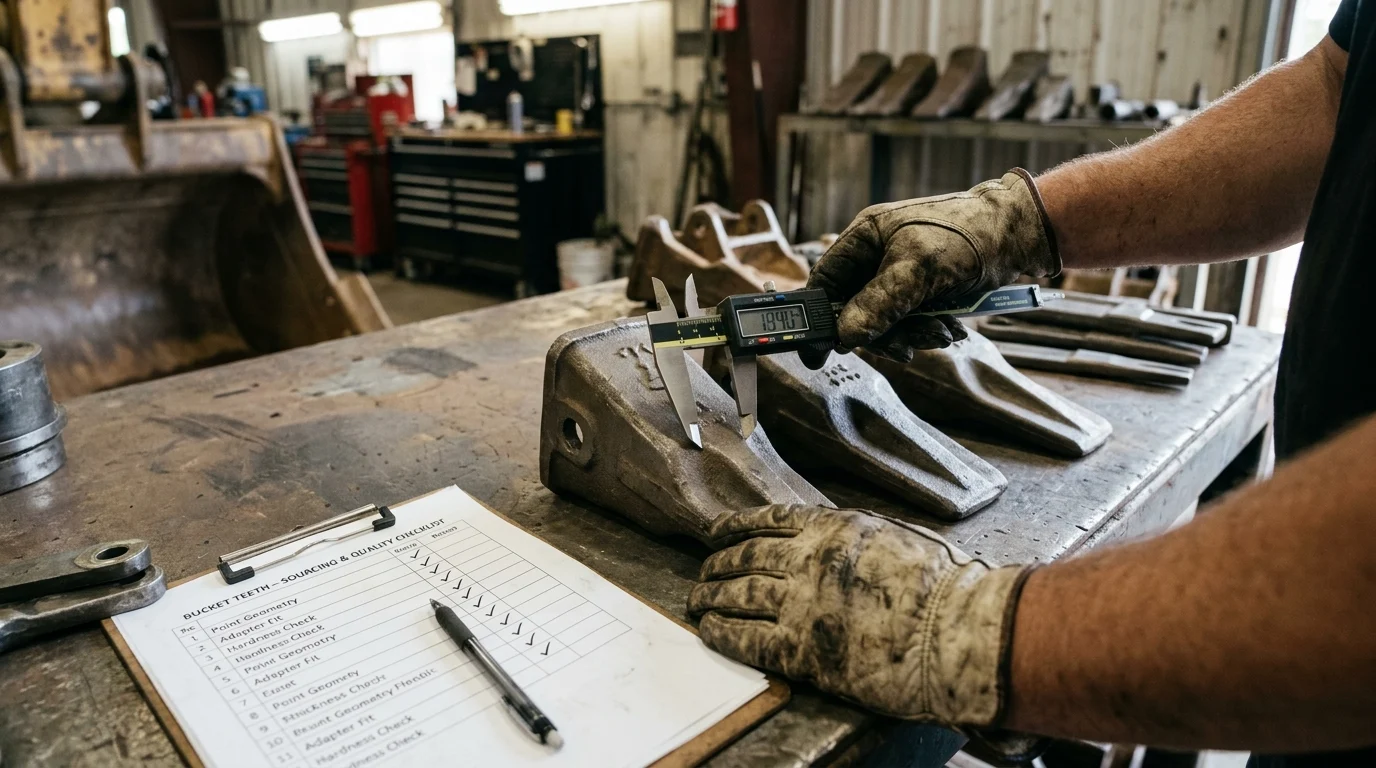
Transitioning from technical engineering evaluation to commercial procurement requires a disciplined and highly organized sourcing strategy. When auditing potential overseas foundries or specialized trading companies, focus heavily on their real production capacity, internal quality control frameworks, and logistical reliability to ensure the global supply chain remains uninterrupted during peak construction seasons.
What to Verify on MOQ, Samples, and Lead Time
Establishing clear terms for Minimum Order Quantities (MOQs) and production timelines early in the negotiation is essential. Most reputable direct foundries require an MOQ of roughly 1,000 kg to 1,500 kg per casting run, which translates to about 100 to 200 standard pieces, depending heavily on the machine class and part weight. Before committing to a full container, always negotiate a paid sample run. A strict benchmark is a defect rate of less than 1% during sample testing before approving mass production. For standard lead times, plan for 25 to 40 days for existing standard molds. If commissioning custom profiles or proprietary designs, factor in an additional 15 to 25 days for CNC tooling and initial mold casting.
How to Build a Practical Buying Checklist
To streamline purchasing operations and eliminate costly errors, develop a standardized buying checklist that the procurement team can strictly follow for every international order.
Key Takeaways
- Wholesale sourcing and supply-chain implications for excavator bucket teeth
- Specifications, compliance, and commercial terms buyers should validate
- Actionable recommendations for distributors and procurement teams
Frequently Asked Questions
How do I know if bucket teeth will fit my excavator?
Match the tooth system to your adapter and machine class. Check pin style, pin diameter, and adapter gap tolerance under 1.5mm to avoid rattling and fast wear.
Which bucket tooth profile is best for rock or mining work?
Use rock chisel or heavy-duty tiger teeth. They add wear material and handle high impact better than general-purpose teeth in quarry, demolition, and mining conditions.
What material specs should I ask a supplier for?
Request MTCs showing alloy grade, 47–52 HRC hardness, and impact toughness of at least 18 J/cm². This helps confirm a good balance of wear resistance and toughness.
Are OEM bucket teeth always worth the higher price?
No. OEM teeth usually make sense for nonstop, high-cost downtime operations. For most construction and utility jobs, quality aftermarket teeth offer strong value at a lower cost.
What happens if I choose the wrong excavator bucket teeth?
Wrong teeth can loosen on the adapter, wear faster, increase fuel use, and even damage the bucket system. Correct fit and application matching reduce downtime and replacement costs.